Silver has a way of making an ordinary object feel like an heirloom. A teaspoon, a slim chain, a pair of hoop earrings — same metal, yet the experience of owning it changes completely depending on what else is in the alloy. Three names come up again and again in shops, auction listings, and workshop conversations: fine silver, sterling silver, and coin silver. On a shelf they look nearly identical. At the bench, on a ring finger, or after twenty years in a drawer, they behave like distant cousins.
What Purity Really Means
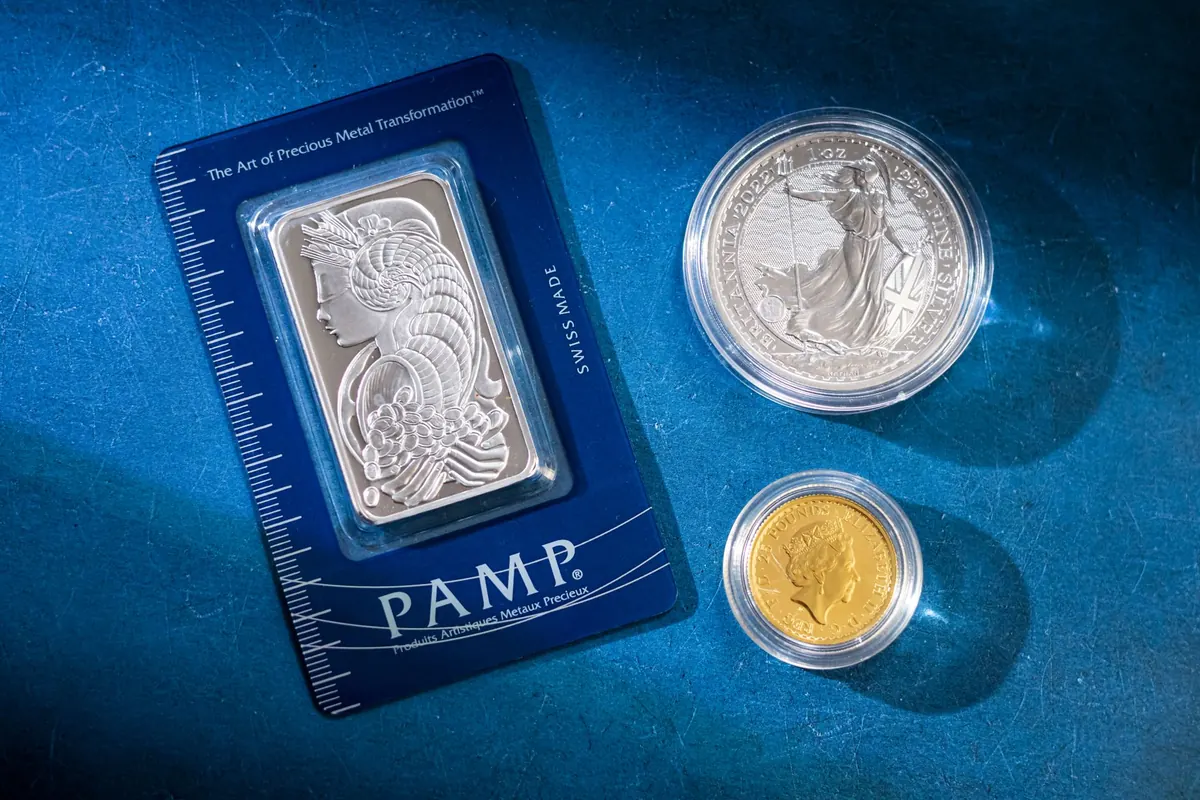
Silver purity is expressed as a percentage of silver by weight, with the remainder made up of other metals — usually copper, sometimes germanium or zinc. Fine silver is 99.9 percent silver, stamped 999. Sterling is 92.5 percent silver and 7.5 percent copper, stamped 925. Coin silver is 90 percent silver and 10 percent copper, stamped 900 or, on older American pieces, simply "Coin."
Two things are worth keeping straight from the start. First, purity is not the same as quality. A well-finished sterling ring with clean solder seams will outlast a badly cast fine silver one every time. Second, different countries set their own benchmarks. You will meet 800 and 835 silver from continental Europe, and Britannia silver at 958 — a standard the UK still hallmarks with its own mark. Knowing the number is useful, but knowing what that number does to the metal is what actually helps you choose.
Fine Silver: Beautiful, Willing, and Soft
Fine silver is the closest you get to pure metal in a finished object. It is pale, buttery in the hand, and slow to tarnish because there is almost no copper in it to react with sulfur in the air. Smiths love it for the same reason buyers of everyday rings sometimes regret it: it moves easily.
In thin sections, fine silver bends with light finger pressure. That makes it ideal for bezel settings around cabochons, where the wall of metal needs to fold over the stone smoothly instead of springing back. It is also the traditional choice for granulation, for fusing rather than soldering, for enameling, and for delicate chain work. Some of the finest traditional chain-making uses fine silver links precisely because the metal anneals soft and takes detail crisply.
The trade-off is wear. Prongs on a fine silver ring will creep and loosen. Clasps lose their spring. A fine silver band worn daily will show scratches quickly and thin out over years rather than decades. If a piece is going to be handled hard, fine silver should be a design decision, not an accident.
Sterling Silver: The Working Standard
Sterling is the alloy most people actually own. Adding 7.5 percent copper gives silver backbone: it work-hardens, holds a shape, and tolerates the friction of daily life. That is why flatware, teapots, trophy cups, ring bands, and clasps are so often sterling. The metal can be rolled, drawn, raised, and cast, and it will still push back against your thumb when you test it.
The cost of that durability is maintenance. Copper in the alloy makes sterling tarnish faster than fine silver, and it creates firescale — a stubborn purple-grey oxide — when you solder without care. Sterling also needs to be annealed and quenched properly between forming steps, or it will crack at the worst moment. A useful modern variation is Argentium sterling, which replaces part of the copper with germanium; it resists tarnish and firescale noticeably better, though some traditionalists dislike the slightly whiter colour.
For everyday jewelry, sterling remains the sensible default. It is hard enough to hold a stone, forgiving enough to repair, and available in almost every finding and chain style you might need to match.
Coin Silver: History You Can Hold
Coin silver sits between the other two at 90 percent silver. The name comes from practice as much as from any standard: American silversmiths through much of the nineteenth century worked in .900 silver, and plenty of it began life as melted coinage. Spoons, sugar tongs, and serving pieces from that era are the most common survivors, and their marks read "Coin," "Pure Coin," "Standard," or "900" rather than "Sterling."
Working with it feels close to sterling — a little different under the file, a little quicker to tarnish because of the extra copper. Where coin silver gets interesting is in restoration. If you are repairing an 1850s spoon, matching the original alloy matters more than upgrading it. Replacing a bowl in sterling on a coin silver handle creates a visible seam and a mismatch that collectors will spot immediately.
One practical caution: old coins are not just raw material. A common silver coin may be worth little beyond its metal, but a rarer date can be worth many times more than the melt value. Check before you cut.
Comparing Durability, Tarnish, and Repair
The three alloys sort themselves neatly once you know what the piece has to survive:
- Hardness and wear: fine silver is the softest and scratches fastest; sterling and coin silver are both noticeably more resistant and hold up well to daily handling.
- Tarnish: fine silver stays bright longest; sterling and coin silver darken sooner, with coin silver generally the quickest of the three.
- Repair and resizing: sterling is the easiest to source matching stock for; fine silver is easy to fuse but prone to deformation; coin silver repairs are best done with like-for-like alloy.
- Best uses: fine silver for bezels, granulation, enameling, and delicate chain; sterling for rings, flatware, holloware, and clasps; coin silver for period pieces, restoration, and historically accurate reproductions.
Reading Marks and Spotting Fakes
The stamp is your first clue, but it is not proof. Plated goods often carry confident-looking words: "silver plate," "EPNS," and "German silver" — the last of which contains no silver at all, only nickel, copper, and zinc. A loupe and a little scepticism go a long way.
Simple checks before you buy
- Look closely at the mark. Genuine marks are usually struck into the metal, slightly uneven, and often worn. Laser-etched or perfectly uniform lettering on an "antique" piece deserves a second look.
- Use a magnet. Silver is not magnetic. A strong pull means steel or nickel underneath.
- Weigh it in your hand. Silver feels denser than most plated base metal of the same size.
- For anything valuable, ask a jeweller for an acid test or a proper appraisal rather than relying on a home test.
Matching the Metal to the Job
Choose fine silver when the design needs softness: a bezel that must fold cleanly, a fused pendant, an enamelled panel, a chain that will be worn lightly. Choose sterling when the piece has to work — a wedding band, a fork, a bracelet with a working clasp. Choose coin silver when authenticity is the point, whether you are restoring a family spoon or building a reproduction with period-correct materials.
Whatever you pick, store it away from rubber bands and wool, keep it out of chlorinated water, and polish lightly with a soft cloth rather than scrubbing. Silver is a forgiving metal, but it remembers every aggressive polish. Treat an antique piece gently and its patina — the dark recesses that give old silver its depth — will keep doing half the work of making it beautiful.
Photo: merwak. raw / Pexels